



Green Cath Labs: How Device Reprocessing Cuts Carbon
23 minutes read time
Sustainability used to be a side project in healthcare. Now it is showing up in board meetings, procurement contracts, and accreditation checklists. Most of the conversation focuses on energy use and recycling programs, but there is a bigger, less-talked-about lever sitting in plain sight: what happens to the single-use devices that cath labs and EP labs run through every single day.
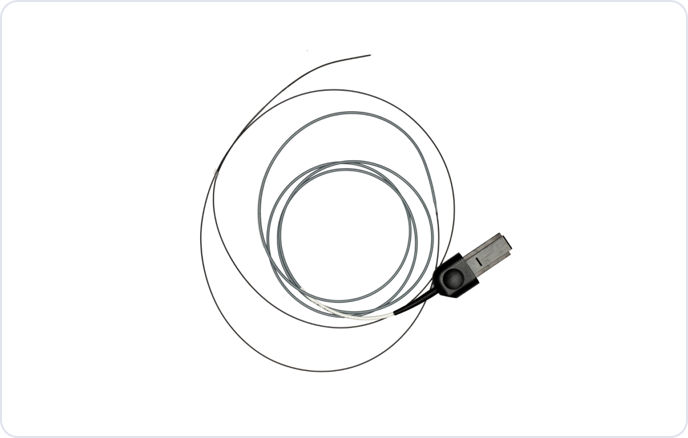
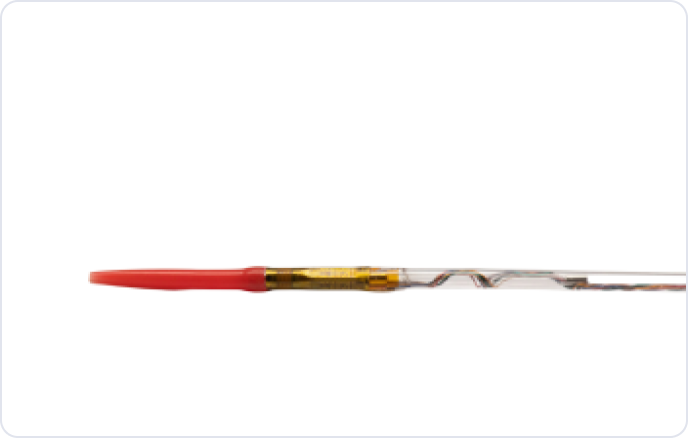
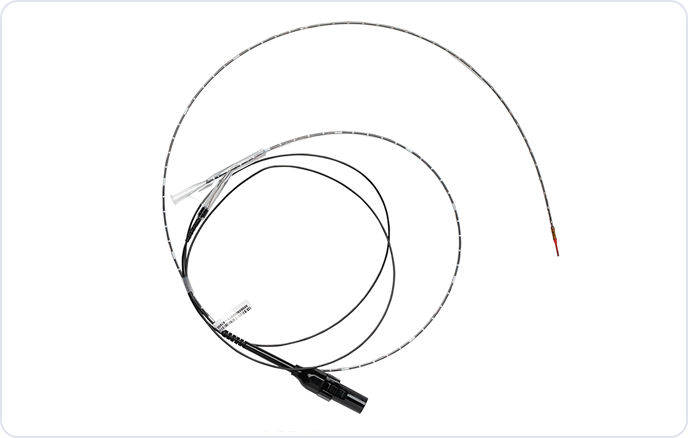
Catheters, sheaths, IVUS probes, and atherectomy devices are labeled "single-use," but a lot of that plastic and hardware is more durable than the label suggests. When those devices are reprocessed through an FDA-regulated program instead of tossed after one case, the environmental math changes in a way that is worth paying attention to.
Healthcare's carbon problem is bigger than most people realize
The U.S. healthcare sector is responsible for roughly 8.5 percent of the country's total greenhouse gas emissions.[1] Globally, healthcare accounts for around 4.4 percent of emissions, which puts the sector in the same league as some entire industries.[2] Most of that footprint does not come from hospital buildings or ambulances. It comes from the supply chain: the manufacturing, packaging, and shipping behind everything a facility buys and uses.
Procedure areas carry more than their fair share of this. Operating rooms and cath labs can use up to six times more energy per square foot than the rest of a facility, and they generate over half of a facility's total waste.[2] If you have ever looked at the size of a case cart after a routine cath procedure, that number probably tracks.
The case for reprocessing, in plain numbers
This is where reprocessing comes in. A growing stack of peer-reviewed life cycle assessments, studies that measure a product's environmental impact from raw material to disposal, have compared new devices against their reprocessed counterparts. The consistent finding is a 40 to 60 percent reduction in greenhouse gas emissions for the reprocessed version, with an average reduction of around 44 percent across the studies.[3]
Cardiovascular devices show up prominently in this data for a simple reason: they tend to be high cost, high volume, and packed with components like imaging elements, steering mechanisms, and wiring, the kind of parts where manufacturing accounts for a large chunk of a device's total footprint. That is exactly the kind of device where reuse makes the biggest dent.
What this looks like at scale
Individually, one reprocessed catheter is a rounding error on a global emissions chart. But multiply that across thousands of facilities doing this consistently, and the numbers stop being small. In 2024 alone, third-party reprocessors helped facilities across the country avoid more than 113 million pounds of CO2-equivalent emissions, on top of generating over $398 million in savings, according to data from the Association of Medical Device Reprocessors (AMDR) cited in a 2025 National Academy of Medicine report.[3] For context, that emissions figure is roughly comparable to the emissions from burning nearly 5.8 million gallons of gasoline.[3]
Through third-party reprocessing programs industry-wide, 2024
In savings generated the same year
What this looks like on the ground
National totals are useful, but the individual program numbers make the case even easier to picture. A few examples from published case studies:
After partnering with a reprocessing vendor, this health system built a program that overcame early physician skepticism through education and workflow changes. Over four years, the program drove roughly $5.1 million in savings and diverted more than 19,000 pounds of waste from landfills, while avoiding over 11,000 pounds of CO2 emissions.[4]
After a vendor transition disrupted an existing collection program, one facility rebuilt it from the ground up with a multi-department team and better staff training. Within six months, collection rates for two devices rose from 23 percent to 31 percent, preventing roughly 650 pounds of plastic waste from reaching a landfill every year.[5]
What both of these examples have in common is that the savings came from process and consistency, not new equipment or a different way of running procedures. The devices being reprocessed were already in use. The only change was where they went after the case ended.
What the safety record actually shows
This is usually the first question that comes up, and it is a fair one. The FDA has regulated single-use device reprocessing since 2000, and treats reprocessors as manufacturers, holding them to the same validation, testing, and quality requirements as the companies that made the original device.[3] A 2008 Government Accountability Office review found that the data available at the time did not indicate reprocessed devices posed a higher health risk than new ones, though the report also noted limitations in that data and the difficulty of drawing direct comparisons.[6] Findings can vary by device type, reprocessing method, and regulatory clearance status, which is exactly why validation and testing requirements are so demanding.
Every device that comes back for reuse goes through cleaning, functional testing, and sterilization before it is cleared to go back into circulation. Devices that do not meet spec are pulled from the process rather than returned to use.
Why some resistance still exists
Some original device manufacturers have pushed back on reprocessing, and their stated reasoning often centers on safety or effectiveness concerns about reprocessed devices. Critics of that position point out that reprocessing also reduces demand for new devices, and note that some manufacturers have adopted measures like disabling devices in software, adding non-reprocessable coatings, or writing exclusivity clauses into contracts, steps that can make reprocessing harder regardless of the stated rationale.[3] Whatever the reasoning behind it, that resistance does not change what the regulatory record shows about devices that go through FDA-cleared reprocessing programs.
Getting a program off the ground
None of this requires ripping up an existing workflow. The programs that succeed tend to follow a similar pattern:
Catheters, sheaths, and imaging probes used in nearly every case are the easiest place to see a return quickly, both financially and environmentally.
Clearly labeled bins in the procedure room and a quick refresher for staff go a long way. Most programs that stall do so because collection habits slip, not because the devices are not eligible.
Look for a partner with clearances for the specific devices you are collecting, and a track record with cardiovascular and vascular devices in particular.
Devices collected, waste diverted, dollars saved. These figures slot directly into whatever sustainability or cost reporting your organization already does.
The bottom line
Reprocessing will not single-handedly solve healthcare's climate footprint, but it is one of the few sustainability moves that is already validated, already regulated, and already sitting in most cath labs' supply closets waiting to be used. The devices do not need to change. The workflow does not need to change. What changes is where a catheter goes once the case is done, and what that one decision adds up to across a year of procedures.
Turning "single use" into a sustainability strategy
NEScientific reprocesses cardiovascular and vascular catheters, including IVUS and atherectomy devices, under FDA-regulated protocols. If your lab is looking at ways to lower costs and reduce waste at the same time, we can help you see what is already eligible.
Learn More About NEScientific →Sources
- The Commonwealth Fund, "How the U.S. Health Care System Contributes to Climate Change," 2022
- Thiel, C., Collins, A., and Vukelich, D., "The Case for Hospitals to Boost Single-Use Device Reprocessing Programs," National Academy of Medicine, June 2025 (citing Eckelman et al., 2020; MacNeill et al., 2017)
- National Academy of Medicine, "The Case for Hospitals to Boost Single-Use Device Reprocessing Programs," June 2025 (2024 savings and emissions figures sourced from AMDR)
- Advantus Health Partners, "Transforming EP Lab Sustainability: How One Health System Saved Millions by Reprocessing Medical Devices," 2025
- Practice Greenhealth, "OSF HealthCare: Data and Collaboration Drive Single-Use Device Reprocessing Success," 2025
- U.S. Government Accountability Office, "Reprocessed Single-Use Medical Devices: FDA Oversight Has Increased, and Available Information Does Not Indicate That Use Presents an Elevated Health Risk," GAO-08-147, 2008