


Medical Waste in U.S. Healthcare: How Much We Generate, and the Role of Single-Use Devices
13 minutes read time
Walk through any busy hospital and you will see it everywhere: peel-pack wrappers, plastic trays, tubing, gowns, gloves, and devices that go straight from a sterile package into a red bag after a single use. Modern medicine runs on disposable products, and that convenience comes with a footprint most patients never see.
So how big is the problem, really? Here are the numbers worth knowing.
01Just how much waste are we talking about?
The most widely cited figure comes from Practice Greenhealth, the leading healthcare sustainability nonprofit, and from Health Care Without Harm: U.S. hospitals produce more than 5 million tons of waste every year, or roughly 29 pounds for every staffed bed, every day.1 A closely related framing traced to the American Hospital Association puts it at about 33.8 pounds of waste per patient per day, which works out to roughly 6 million tons a year and about 14,000 tons every single day.2
To put that in perspective, peer-reviewed plastics research uses a working figure of about 5.9 million tonnes of healthcare waste annually in the United States.2 However you slice it, that is a staggering amount of material flowing out of a system whose entire purpose is to make people healthier.
Not all of that waste is equally dangerous or expensive. According to the World Health Organization, about 85 percent of healthcare waste is ordinary, non-hazardous material similar to household trash: paper, packaging, food scraps, and clean plastics. The remaining 15 percent globally is hazardous, meaning it may be infectious, chemical, or radioactive.3 In the U.S., the regulated medical waste fraction is actually under 8 percent.1
Here is the catch that makes that small slice so important. Regulated medical waste makes up less than 8 percent of a hospital's total volume but can cost more than 40 percent of its waste management budget to handle.1 It is the expensive stuff, and a lot of it does not need to be there.
02The operating room is the epicenter
If you want to find the waste, follow the surgeons. Operating rooms generate between 20 and 33 percent of a hospital's total waste while using 40 to 60 percent of its supply budget.4 They also produce as much as two-thirds of all regulated medical waste in the building. A single procedure can fill several red bags before the patient even leaves the table.
hospital waste
medical waste
supply spend
Why did the OR become such a waste machine? It was not always this way.
03How we got hooked on disposables
Before the late 1970s, most medical devices were reusable. They were made of glass, rubber, and metal, and hospitals cleaned and sterilized them in-house.5 Then several things happened at once. Better plastics arrived in the early 1980s, devices got smaller and more intricate, ethylene-oxide sterilization made mass production easier, and the HIV and AIDS era drove a deep fear of cross-contamination. Manufacturers began labeling more and more products "single-use," and the disposable era took off.5
Today that means a lot of plastic. Of the roughly 14,000 tons generated daily, about 20 to 25 percent is plastic,6 and an estimated 91 percent of plastics overall, healthcare's included, are never recycled. One analysis estimates U.S. healthcare alone produces around 1.7 million tonnes of plastic waste a year.2
Most of that plastic was used for a matter of minutes, and much of it never had to be thrown away at all.
04It is not just landfills. It is the climate.
Waste is the visible part of the problem. The carbon footprint is the bigger, quieter one. A landmark study by Eckelman and colleagues, published in Health Affairs in 2020, found that U.S. healthcare is responsible for roughly 8.5 percent of the nation's greenhouse-gas emissions, the highest per-capita rate of any industrialized country.7 Globally, healthcare accounts for about 4.4 percent of net emissions, which would make it the fifth-largest emitter on Earth if it were a country.8
And here is the part that matters most for anyone buying supplies: roughly 80 percent of U.S. healthcare emissions come from the supply chain, the manufacturing, shipping, and disposal of products, including the disposable equipment used a single time.7 In other words, the devices we throw away are not a side issue. They are most of the footprint.
(products & disposables)
(facilities, vehicles)
05The fix that is already proven: reprocessing
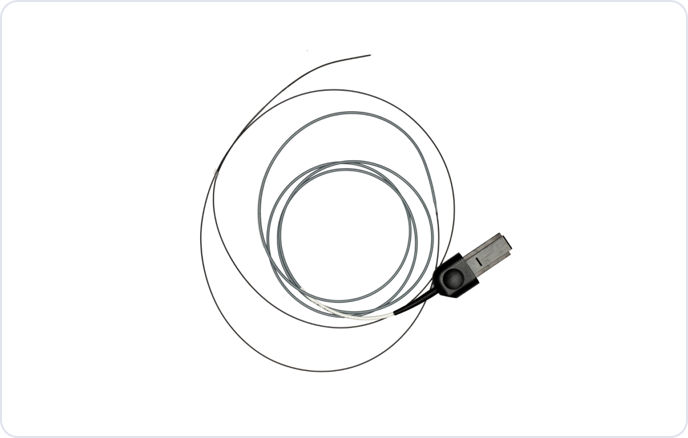
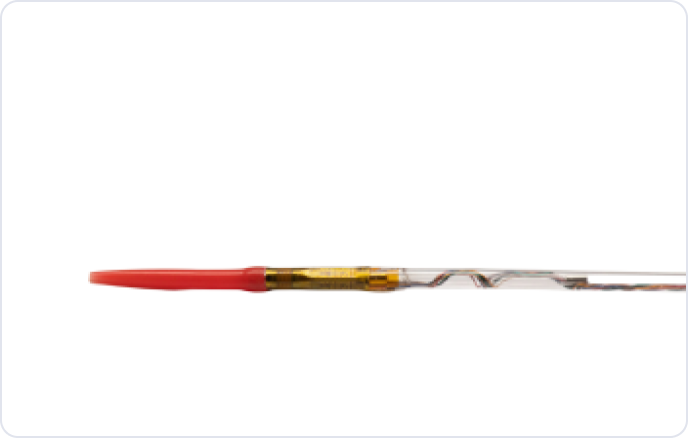
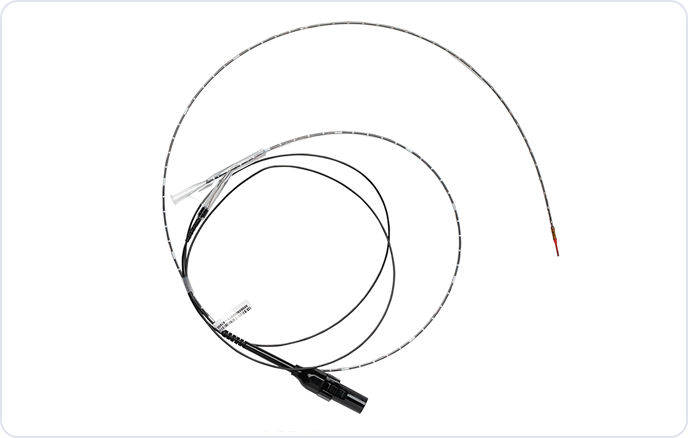
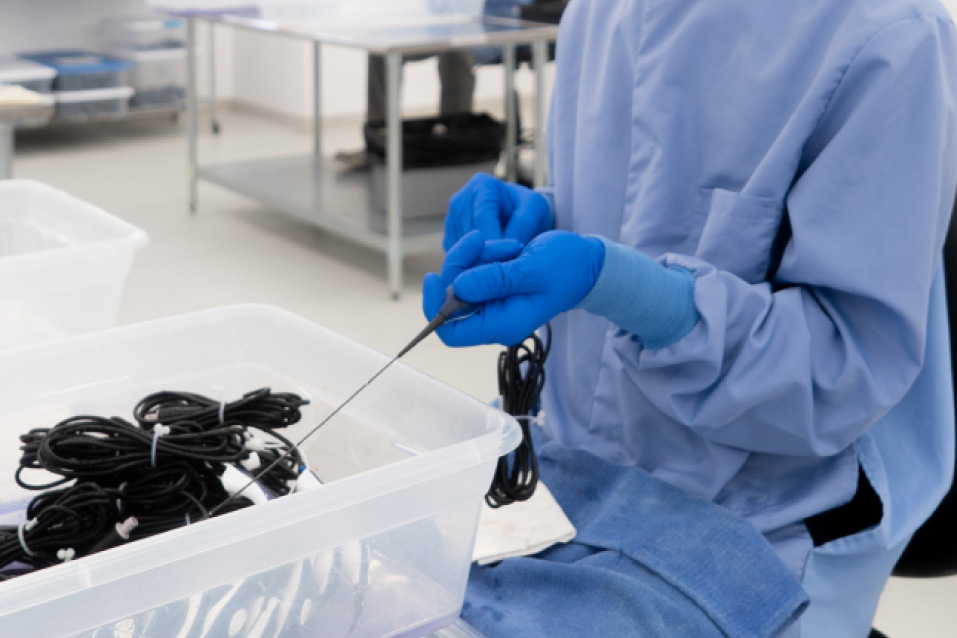
Here is the encouraging part. A large share of single-use devices does not have to be single-use at all. Reprocessing is the FDA-regulated practice of collecting devices labeled "single-use," then cleaning, inspecting, testing, and repackaging them so they can be safely used again. The FDA has regulated commercial reprocessors as device manufacturers since 2000, and a Government Accountability Office review found no increased patient safety risk in the devices studied, though findings may vary by device type, reprocessing method, and regulatory clearance status.9
It is not a fringe idea. Reprocessing is endorsed as a key waste-reduction and decarbonization strategy by the National Academy of Medicine, the U.S. Department of Health and Human Services, and Practice Greenhealth, among others.9 And the results are measurable.
According to the Association of Medical Device Reprocessors, in 2023 nearly 12,000 hospitals and surgical centers used reprocessed devices, diverting a record 23.7 million pounds of waste from landfills and saving over $465.8 million.10 On the environmental side, the first comprehensive life-cycle assessment of a reprocessed catheter, conducted by the Fraunhofer Institute and published in Sustainability in 2021, found that choosing a reprocessed device over a new one cut its global-warming impact by more than 50 percent.11 Later reviews summarizing multiple studies put the typical reduction at 40 to 60 percent.
The most striking number, though, is how much room there is to grow. By some estimates, only about 2 percent of single-use devices on the U.S. market are currently being reprocessed.12 If every hospital reprocessed at the rate of today's top performers, U.S. facilities could save an additional $2.28 billion a year.10
The waste is enormous, but the solution is mostly untapped
U.S. healthcare generates 5 to 6 million tons of waste a year, and disposable devices drive both that volume and most of its carbon footprint. Reprocessing already keeps tens of millions of pounds out of landfills while saving hundreds of millions of dollars. With only a small fraction of eligible devices being reprocessed today, the biggest gains are still ahead of us.
When done through a properly FDA-cleared reprocessor, this process can maintain safety and quality standards, though outcomes may vary depending on device type, reprocessing method, and clearance status. It asks hospitals to look at a device they were about to throw away and ask a simple question: does this really have to be garbage? More and more often, the answer is no.
Sources
- Practice Greenhealth, "Waste." practicegreenhealth.org/topics/waste/waste-0
- American Hospital Association data, cited in the AMA Journal of Ethics (2022); plastics figures per Rizan et al. journalofethics.ama-assn.org
- World Health Organization, "Health-care waste" fact sheet. who.int/news-room/fact-sheets/detail/health-care-waste
- Health Care Without Harm, "Waste Management," and peer-reviewed surgical literature on operating-room waste. us.noharm.org/waste-management
- Johns Hopkins / The Lancet commentary (2023) on the history of single-use devices; congressional testimony via govinfo.gov. washingtondc.jhu.edu
- AMA Journal of Ethics (2022) and Healthcare Plastics Recycling Council on plastic share of healthcare waste. journalofethics.ama-assn.org
- Eckelman M.J. et al., "Health Care Pollution And Public Health Damage In The United States," Health Affairs (2020). healthaffairs.org/doi/10.1377/hlthaff.2020.01247
- Health Care Without Harm / Arup, "Health Care's Climate Footprint" (2019). Via Health Policy Watch. healthpolicy-watch.news
- National Academy of Medicine, "The Case for Hospitals to Boost Single-Use Device Reprocessing Programs." nam.edu/perspectives
- Association of Medical Device Reprocessors (AMDR), 2023 annual reprocessing survey (released October 2024).
- Schulte A. et al., life-cycle assessment of a reprocessed catheter, Fraunhofer Institute UMSICHT, Sustainability (2021).
- Encyclopedia MDPI on single-use device reprocessing eligibility; National Academy of Medicine (see ref. 9).