
What Does It Actually Cost a Hospital to Run a Single Interventional Procedure?
The number on the bill and the number it costs to deliver care are two very different things. Here's where the money really goes, and the one lever that moves it the most.
27 minutes read time
A single interventional procedure can cost a hospital anywhere from roughly $1,000 for a simple diagnostic catheterization to well over $10,000 for a coronary stent or peripheral vascular case.
In device-heavy procedures, equipment and disposables are the single biggest cost driver — not staff, not the room. For PCI, equipment accounts for 85% of the total procedure cost.[1]
Reprocessed single-use devices that carry FDA clearance can lower device costs by 30% to 50%, according to the Association of Medical Device Reprocessors (AMDR).[2] That makes reprocessing one of the most controllable levers a cath lab director or CFO has right now — though results will vary depending on device type, reprocessing method, and a vendor's specific regulatory clearance status.
The question sounds simple enough. What does it cost to run one interventional procedure? But in practice, there are at least three very different numbers hiding inside that question, and confusing them is exactly how cost conversations go sideways.
The first number is the professional fee — what the physician gets paid for doing the work. For a cardiac catheterization, Medicare reimburses the cardiologist about $203 on average for the professional component.[3] That is, bluntly, a rounding error in the full picture.
The second number is the charge — the sticker price on the bill. Those numbers are notoriously inflated and disconnected from actual cost. Cash prices for a cardiac cath commonly run $5,000 to $15,000, and complex stent cases on the commercial side can push $15,000 to $40,000.
The third number is the one that actually matters to anyone running a hospital or a cath lab: the true cost to deliver the case. The staff time, the room overhead, and the supplies and devices consumed. This is the number you can actually manage.
A breakdown of where the money goes
One of the cleanest published looks at real procedure cost comes from a time-driven activity-based costing study in Circulation: Cardiovascular Interventions. Researchers followed 100 patients through a cath lab and measured exactly what each case consumed across three buckets: staff labor, facility overhead, and equipment.[1]
The most complex cases cost roughly five to ten times what a simple diagnostic study costs. But the more important finding is where the money goes inside each case.
The takeaway here is pretty significant. In the procedures that cost the most, you are not mostly paying for people or for the room. You are paying for the catheters, wires, balloons, stents, closure devices, and imaging equipment that get opened, used once, and thrown away.[1]
This pattern holds across specialties. In interventional radiology, published analyses found disposable materials account for 30% to 80% of total procedure cost. For endovascular aortic aneurysm repair, the endografts alone were 87% of charges. For an atrial fibrillation ablation, disposable supplies were the single largest cost component at around 45%.[4]
The hospital-wide context: costs are climbing fast
None of this is happening in isolation. Hospitals are under serious financial pressure right now. According to the American Hospital Association's 2026 Costs of Caring report, total hospital expenses grew 7.5% in 2025 — more than twice the rate of growth in hospital prices. Supply expenses alone increased 9.9% and drugs climbed 13.6%.[5]
Medical supplies already represent about 10.5% of the average hospital's total budget — roughly $146.9 billion across the industry in 2023. And with nearly 70% of medical devices marketed in the US manufactured exclusively overseas, tariff pressure and supply chain disruptions are only making that worse.[5]
"The average cath lab case actually ran a slightly negative operating margin — around -1% — once all costs were accounted for."
MedAxiom cath lab economics analysisCath labs that were once reliable profit centers have become cost centers in many health systems. The combination of flat or falling reimbursement and rising device costs is squeezing margins in a way that is hard to offset with operational efficiency alone.
Where single-use devices fit in — and why IVUS is the poster child
Intravascular ultrasound (IVUS) is a perfect example of the modern cost dilemma facing interventional teams.
The clinical case for IVUS is genuinely strong. Multiple studies link IVUS-guided PCI to lower mortality, fewer repeat procedures, and better stent sizing. Guidelines give it a Class IIa recommendation. And yet US adoption is strikingly low — IVUS is used in just 5.6% of PCIs based on Medicare data, and a 2019 analysis put overall intravascular imaging adoption at approximately 15% with a median operator use of only 3.92%.[6]
By contrast, Japanese registry data show IVUS use above 80%. One of the most-cited reasons for the gap? Cost. Every IVUS case requires a single-use catheter that runs $600 to $1,200 on contract, with reseller list prices as high as $2,495 per unit — on top of a console that costs $100,000 to $200,000.[7] A tool that demonstrably improves outcomes ends up underused partly because the per-case device cost is hard to justify against reimbursement.
Laser atherectomy tells a similar story. Atherectomy is reimbursed well in the office-based lab setting, but the disposable laser catheter is one of the most expensive consumables in the room. As one vascular physician put it directly: "the most expensive consumable we use is the catheter."
Reprocessing: the most controllable lever you have
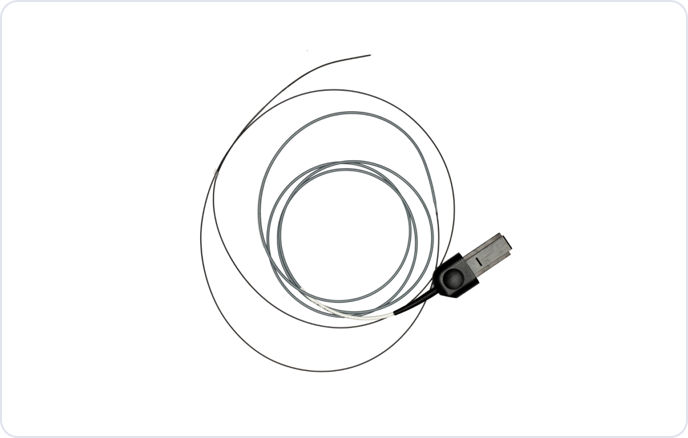
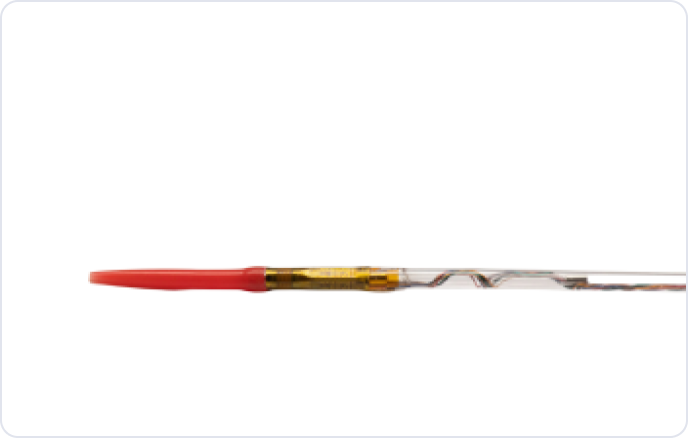
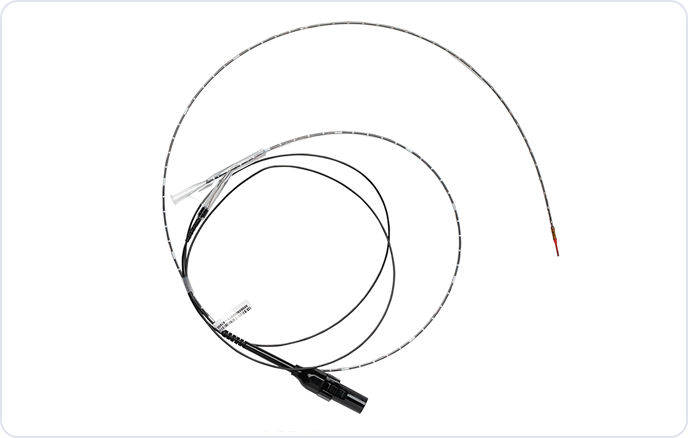
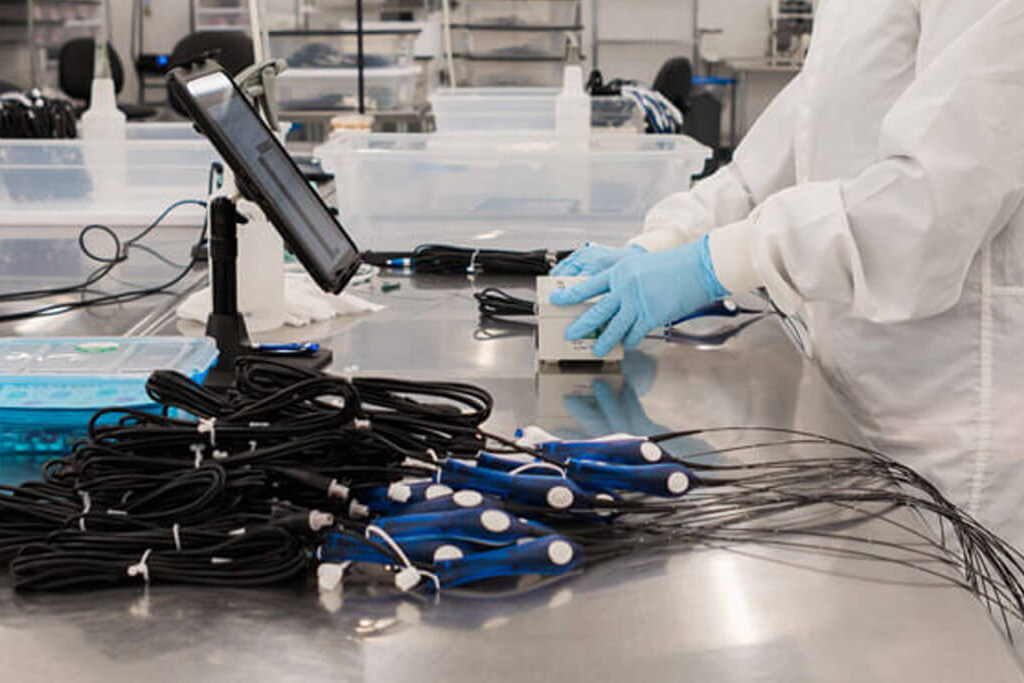
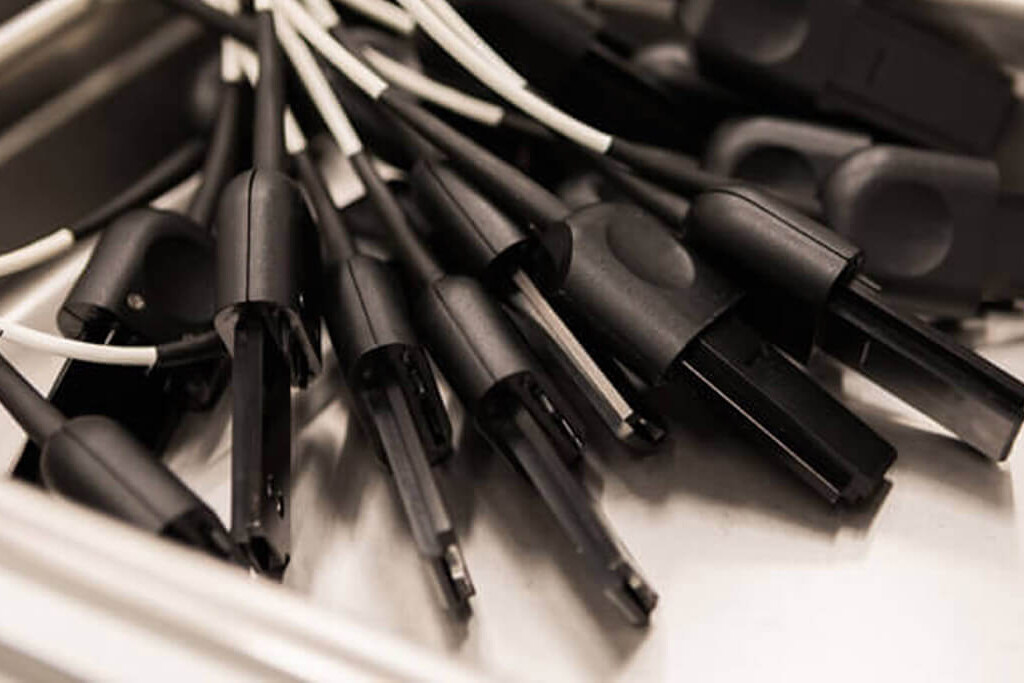
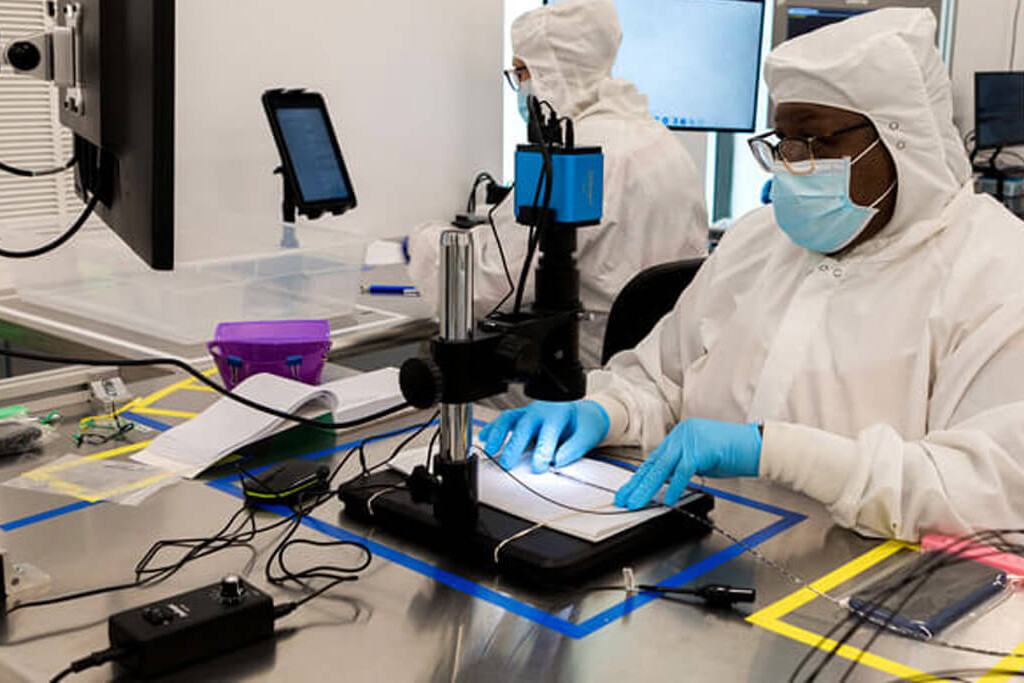
This is where reprocessing enters the picture. A reprocessed single-use device is a device that was originally labeled for one use, collected after that use, then cleaned, tested, sterilized, function-checked, and repackaged by an FDA-regulated reprocessor so it can be used again.
One thing that surprises a lot of people: this is not a regulatory loophole. The FDA requires third-party reprocessors to meet the same regulatory framework as original manufacturers. A reprocessor must obtain its own 510(k) clearance for each device type, demonstrating that the reprocessed device is substantially equivalent and that its safety and effectiveness profile has been validated for the specified number of reprocessing cycles. It is worth noting, however, that regulatory requirements and clearance status vary by device type — not every single-use device is eligible or cleared for reprocessing.
The safety data discussed here reflects findings from available studies and government reviews at the time of publication. Results may vary depending on device type, reprocessing method, and a vendor's specific regulatory clearance status. Always verify that your reprocessing partner holds current, device-specific FDA 510(k) clearance before use.
The independent safety record, for FDA-cleared reprocessed devices specifically, is worth looking at. The Government Accountability Office reviewed the practice twice — once in 2000 and again in a 2008 report titled "Reprocessed Single-Use Medical Devices: FDA Oversight Has Increased, and Available Information Does Not Indicate That Use Presents an Elevated Health Risk." The GAO found that no causative link had been established between reported injuries or deaths and reprocessed devices across the study window — though the agency's review was not exhaustive of all device types, and the findings should be understood in that context.[8]
What the savings actually look like
According to AMDR, hospitals can lower their costs for eligible medical devices by 30% to 50% through reprocessing programs.[2] That figure is frequently cited across sources, though actual savings will depend on your device mix, contract pricing, and collection rates.
The dollar impact at the facility level can be significant. US hospitals and surgical centers saved nearly half a billion dollars through reprocessing in 2024, with more than $443 million of that coming from reprocessed single-use medical devices. If all hospitals reprocessed at the rate of the top 10% of performers, the industry estimates the total savings could reach into the billions. A typical 200-bed hospital can realistically save $600,000 to $1 million a year, depending on volume and device mix.[9]
Illustrative estimates based on published contract ranges and reported 30% savings on contract price. Actual pricing varies by facility, contract, and device type.
In the cath lab and EP lab specifically, the per-case math is compelling. Reprocessing can cut device costs in an AFib ablation by nearly 30%, saving more than $3,000 per case on a procedure where device costs run about $10,500.[10] On expensive individual devices like IVUS catheters, savings can exceed $1,000 per device.
For IVUS and atherectomy specifically, NEScientific customers have reported saving over $400,000 using approximately 2,000 reprocessed devices since 2020 — roughly $200 in savings per device. NEScientific's customer base collectively saved over $9 million in 2023 by incorporating reprocessed catheters alongside OEM purchasing rather than relying on OEM alone.
The elegance of the model
Reprocessing doesn't ask clinicians to change what they do. The physician still uses the same device they know and trust. The hospital simply collects used devices, sends them to the reprocessor, and buys back FDA-cleared units at a fraction of the price.
And because the savings from reprocessed IVUS can fund using IVUS in more cases, you can reframe this: reprocessing isn't about cheaper care. It's about being able to afford better care.
One more benefit worth mentioning: waste
Healthcare generates about 5.9 million tons of waste per year in the US. One cath lab study found that just 70 cases over five days produced 116 pounds of recyclable material. Extrapolated nationally, PCI procedures alone generate at least 3 million pounds of recyclable waste a year.
Recent life cycle assessments suggest a 40% to 60% reduction in greenhouse gas emissions for reprocessed devices compared to new ones, though these figures vary by device category and study methodology. The healthcare sector accounts for about 8.5% of US greenhouse gas emissions, and single-use devices are a meaningful contributor.[9] Reprocessing is one of the rare moves that can simultaneously reduce cost and environmental impact — which is why it fits into both a cost savings strategy and a broader sustainability program.
Where to start
Know your real cost per case, not your charges. Activity-based costing on your highest-volume interventional procedures will show you quickly whether equipment is really driving 80% to 85% of your complex case costs. If it is, you know where to focus.
Target the device line first. A 30% to 50% reduction on reprocessable devices moves the needle far more than squeezing staff efficiency or room turnover time.
Work with a regulated partner. Confirm your reprocessing vendor holds current, device-specific FDA 510(k) clearances for every device type you plan to use. Track your collection rates and benchmark against industry leaders — collection discipline is one of the biggest variables in how much you actually save.
Use the savings to expand care, not just cut costs. If saving $200 per IVUS catheter means you can afford to use IVUS on more cases, the clinical benefit compounds on top of the financial benefit.
Sources
- Circulation: Cardiovascular Interventions — Catheterization Laboratory Activity-Based Costing (ahajournals.org)
- Association of Medical Device Reprocessors (AMDR) — Cost Savings (amdr.org)
- Our Health Network / Texas Health Harris Methodist — Cardiac Catheterization Cost Data (ourhealthnetwork.com)
- NIH/PMC — Major drivers of healthcare system costs for AF ablation; Interventional radiology cost analyses
- American Hospital Association — 2026 Costs of Caring Report (aha.org)
- NIH/PMC — IVUS-guided vs. angiography-guided PCI meta-analysis; JACC: Cardiovascular Interventions IVUS adoption data
- Block Imaging — IVUS and ICE Ultrasound Imaging in the Cath Lab (blockimaging.com)
- U.S. Government Accountability Office — Reprocessed Single-Use Medical Devices, 2008 (gao.gov)
- Cardinal Health — Leveraging medical device reprocessing to reduce healthcare's carbon footprint, April 2026 (cardinalhealth.com)
- Innovative Health — EP Single-Use Device Reprocessing by the Numbers; Reprocessing in the Cardiac Cath Lab
See how much your facility could save
NEScientific reprocesses FDA-cleared IVUS and laser atherectomy catheters. Request a quote or talk to our team about your specific device mix.